Understanding Asbestos Exposure and Respiratory Cancer
What is Asbestos?
Asbestos refers to a group of naturally occurring minerals that have been widely used in various industries due to their useful properties. These minerals are made up of thin, durable fibers that are resistant to heat and electricity. Because of these characteristics, asbestos was incorporated into a vast array of building materials and manufactured goods for much of the 20th century. However, the very properties that made asbestos desirable also make it a significant health hazard when disturbed. When asbestos-containing materials are damaged or deteriorate, microscopic fibers can become airborne. Inhaling these fibers is the primary route of exposure that can lead to serious health issues, particularly affecting the lungs and the lining of the chest and abdomen.
Historical Uses of Asbestos
For decades, asbestos was a go-to material in construction and manufacturing. Its fire-resistant and insulating qualities made it seem like a miracle substance. You could find it in:
- Insulation for pipes, boilers, and attics
- Ceiling and floor tiles
- Cement products, like roofing and siding
- Automotive parts, such as brake pads and clutches
- Textiles and coatings
This widespread use meant that many workers, particularly in the construction, shipbuilding, and manufacturing sectors, were regularly exposed to asbestos fibers without knowing the risks. The full extent of its dangers wasn’t widely understood or acknowledged until much later.
Occupational Exposure Risks
Certain jobs carried a much higher risk of asbestos exposure. Workers who handled asbestos materials directly, or those who worked in environments where asbestos was present and disturbed, faced the greatest danger. This included:
- Miners and mill workers: Involved in extracting and processing asbestos ore.
- Construction and demolition workers: Exposed when cutting, drilling, or removing asbestos-containing materials.
- Shipyard workers: Asbestos was heavily used in shipbuilding for insulation and fireproofing.
- Insulation installers: Applying asbestos insulation in buildings and industrial settings.
- Mechanics: Working on vehicle parts like brakes and clutches that contained asbestos.
⠀
Even with protective gear, the fine nature of asbestos fibers meant that inhalation was often unavoidable, leading to long-term health consequences for many individuals.
The Pathogenesis of Asbestos-Related Lung Disease
How Asbestos Fibers Damage Lung Tissue
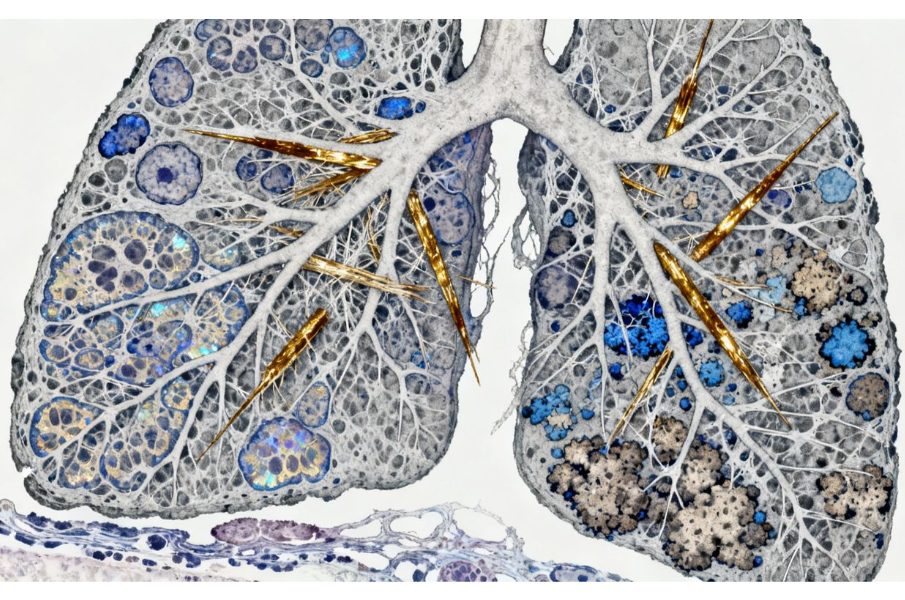
When asbestos fibers are inhaled, they can travel deep into the lungs. These fibers are sharp and durable, unlike anything the body is used to dealing with. Once inside, the lungs try to get rid of them, but the fibers are tough. Immune cells, like macrophages, attempt to engulf the fibers, but often fail. This struggle is where the damage really starts. The fibers can pierce cell membranes and cause direct injury. They can also trigger a persistent inflammatory response. Think of it like tiny, sharp shards constantly irritating the delicate lung lining. This irritation doesn’t just go away; it sets off a chain reaction.
The Latency Period of Asbestos Cancers
One of the most unsettling aspects of asbestos-related diseases is the long time it takes for them to show up. This waiting period, known as the latency period, can stretch for decades – often 15 to 35 years, sometimes even longer, after the initial exposure. It’s not like a cold that appears in a few days. The slow, ongoing damage and the body’s attempts to repair it over many years eventually lead to changes that can become cancerous. This long delay makes it hard to connect past exposures to current illnesses, especially since people might have worked in different jobs or lived in different places over the years.
Inflammation and Fibrosis
The body’s response to the persistent presence of asbestos fibers is chronic inflammation. This isn’t the kind of inflammation that heals quickly. Instead, it’s a long-term, low-grade battle. To try and wall off the irritating fibers, the lungs start producing scar tissue. This process is called fibrosis. Over time, this scar tissue builds up, making the lung tissue stiff and less able to function properly. This scarring can interfere with breathing and gas exchange. The continuous cycle of inflammation and fibrosis creates an environment where cells are more likely to mutate and develop into cancer. This scarring can also trap fibers, keeping them in place to continue causing irritation.
Specific Respiratory Cancers Linked to Asbestos
When asbestos fibers make their way into the lungs, they can cause serious health problems, including specific types of cancer. It’s not just one kind of cancer either; asbestos has been linked to several serious respiratory illnesses. Mesothelioma is often considered the signature cancer associated with asbestos exposure.
Mesothelioma: A Signature Asbestos Cancer
Mesothelioma is a rare but aggressive cancer that affects the mesothelium, a protective lining that covers many internal organs. The most common form develops in the lining of the lungs (pleural mesothelioma), but it can also occur in the lining of the abdomen (peritoneal mesothelioma) or heart (pericardial mesothelioma). The link between asbestos and mesothelioma is very strong; in fact, it’s rare to find cases of mesothelioma that aren’t related to asbestos exposure. This type of cancer often has a long latency period, meaning it can take decades after exposure for symptoms to appear. If you’re concerned about past exposure, understanding the risks is important, and resources are available to help explain the risks.
Lung Cancer and Asbestos Exposure
Beyond mesothelioma, asbestos exposure is also a significant cause of lung cancer. It’s estimated that asbestos accounts for a notable percentage of all lung cancer cases. The risk is particularly high for individuals who have had prolonged or intense exposure to asbestos fibers. It’s important to note that asbestos exposure doesn’t just increase the chance of developing lung cancer; it can also make other treatments less effective. The fibers can cause scarring and inflammation in the lung tissue, creating an environment where cancer cells can grow more easily.
Other Potential Cancers
While mesothelioma and lung cancer are the most well-known respiratory cancers linked to asbestos, research has also suggested associations with other types of cancer. These include cancers of the larynx (voice box) and ovaries. The exact mechanisms for these associations are still being studied, but it highlights the widespread impact asbestos can have on the body. The variety of cancers linked to asbestos underscores the need for caution and awareness regarding this material. Many organizations provide information on the different types of cancers that can result from asbestos exposure and their symptoms.
Factors Influencing Asbestos Exposure and Cancer Risk
Fiber Type and Size
Not all asbestos fibers are created equal when it comes to health risks. The mineral comes in different forms, primarily amphibole and serpentine. Amphibole asbestos, like crocidolite (blue asbestos) and amosite (brown asbestos), tends to be more dangerous. These fibers are typically long, thin, and needle-like, making them easier to inhale deep into the lungs. Serpentine asbestos, like chrysotile (white asbestos), has a curly structure. While historically thought to be less harmful, research shows that even chrysotile can cause disease, especially with heavy exposure. The size of the fibers also matters. Smaller fibers can penetrate deeper into the lung tissue, increasing the chance of damage and inflammation that can lead to cancer over time. The specific characteristics of the asbestos fibers inhaled play a significant role in determining the likelihood and severity of developing asbestos-related diseases.
Duration and Intensity of Exposure
How long someone was exposed to asbestos and how much asbestos they were exposed to are major factors. Think of it like this: a brief, low-level exposure is less likely to cause problems than years of working in an environment with high levels of airborne asbestos. Workers in industries like shipbuilding, construction, and mining, especially in the past before regulations were strict, often faced prolonged and intense exposure. The cumulative dose – the total amount of asbestos fibers that entered the body over time – is a key consideration. Even short periods of very high exposure can be risky. It’s the total burden of fibers on the lungs that seems to drive the development of disease.
Smoking as a Synergistic Factor
When asbestos exposure is combined with smoking, the risk of developing lung cancer skyrockets. This isn’t just a simple addition of risks; it’s a synergistic effect, meaning the combined risk is much greater than the sum of the individual risks. Asbestos fibers can lodge in the lungs, causing irritation and inflammation. Smoking introduces carcinogens and further damages lung tissue, impairing the lungs’ natural cleaning mechanisms. This dual assault makes the lung cells much more vulnerable to cancerous changes. For smokers who have been exposed to asbestos, the risk of lung cancer can be 50 to 90 times higher than for individuals who neither smoke nor have asbestos exposure. Quitting smoking is one of the most impactful steps an exposed individual can take to reduce their cancer risk.
Diagnosing and Managing Asbestos-Related Respiratory Cancers
Figuring out if someone has a cancer linked to asbestos isn’t always straightforward. It often takes a combination of methods to get a clear picture. Early and accurate diagnosis is key for the best possible outcomes.
Diagnostic Tools and Techniques
When doctors suspect an asbestos-related cancer, they’ll typically start with a thorough review of the patient’s history, especially looking for any past exposure to asbestos. Then, they’ll move on to imaging tests. These can include:
- Chest X-rays: These are often the first step, showing general lung structure and any obvious abnormalities like fluid buildup or tumors.
- Computed Tomography (CT) scans: These provide much more detailed images of the lungs and chest cavity, helping to pinpoint the exact location and size of any suspicious masses. A CT scan is a main imaging tool for diagnosing, planning treatment, and monitoring pleural mesothelioma (PM) [9f9b].
- Positron Emission Tomography (PET) scans: Sometimes used to see if cancer has spread to other parts of the body.
Beyond imaging, a definitive diagnosis usually requires a biopsy. This is where a small piece of tissue is removed from the suspected area and examined by a pathologist. For mesothelioma, a biopsy is how the cancer is definitively diagnosed [72b2]. This microscopic examination is the gold standard for confirming the presence of cancer cells and identifying their type.
Treatment Options for Mesothelioma and Lung Cancer
Once a diagnosis is confirmed, the treatment plan is tailored to the specific type of cancer, its stage, and the patient’s overall health. For mesothelioma, which is strongly linked to asbestos, treatment can be complex. Options might include:
- Surgery: To remove tumors, though this is often challenging with mesothelioma due to its tendency to spread.
- Chemotherapy: Using drugs to kill cancer cells.
- Radiation Therapy: Using high-energy rays to target and destroy cancer cells.
- Immunotherapy: Treatments that help the body’s own immune system fight the cancer.
Lung cancer that develops in someone with a history of asbestos exposure is treated similarly to other types of lung cancer, with surgery, chemotherapy, radiation, and targeted therapies all being potential options. Often, a combination of these treatments is used.
Prognosis and Patient Outcomes
The outlook for individuals diagnosed with asbestos-related respiratory cancers can vary significantly. Factors like the type of cancer, how advanced it is at diagnosis, the patient’s general health, and how well they respond to treatment all play a role. Mesothelioma, in particular, has historically had a challenging prognosis, but advances in treatment are slowly improving outcomes for some patients. Lung cancer prognosis also depends heavily on the stage at diagnosis and the specific type of lung cancer. Ongoing research continues to explore new and more effective ways to manage these diseases and improve the quality of life for affected individuals.
Preventing Future Asbestos Exposure and Respiratory Cancer
Regulatory Measures and Workplace Safety
Controlling asbestos exposure is a major focus for preventing asbestos-related diseases. Governments and regulatory bodies worldwide have put rules in place to limit the use of asbestos and protect workers. These regulations often cover how asbestos can be handled, removed, and disposed of. For example, in many countries, asbestos is banned or heavily restricted in new construction materials. For jobs where exposure is still possible, like demolition or renovation, strict safety protocols are required. This includes using protective gear, setting up containment areas to stop fibers from spreading, and proper training for workers. Adherence to these safety standards is key to reducing occupational risks.
Identifying and Abating Asbestos Materials
Knowing where asbestos might be found is the first step in preventing exposure. Asbestos was used in many building materials for a long time because it’s strong and heat-resistant. Common places include insulation, ceiling tiles, floor tiles, and roofing materials. When these materials are disturbed, like during renovations or if they become damaged, asbestos fibers can become airborne. Professional asbestos abatement services are necessary for safe removal. These professionals are trained to identify asbestos-containing materials and remove them without releasing fibers into the environment. It’s generally advised not to disturb suspect materials yourself.
Public Health Awareness Campaigns
Raising public awareness about the dangers of asbestos is also important. Many people may not realize that asbestos can still be present in older homes and buildings. Education campaigns can inform homeowners, building managers, and the general public about:
- The health risks associated with asbestos exposure.
- Where asbestos might be found in residential and commercial properties.
- The importance of professional assessment and removal if asbestos is suspected.
- The dangers of disturbing asbestos-containing materials.
By spreading this information, communities can take better steps to protect themselves and future generations from the harmful effects of asbestos.